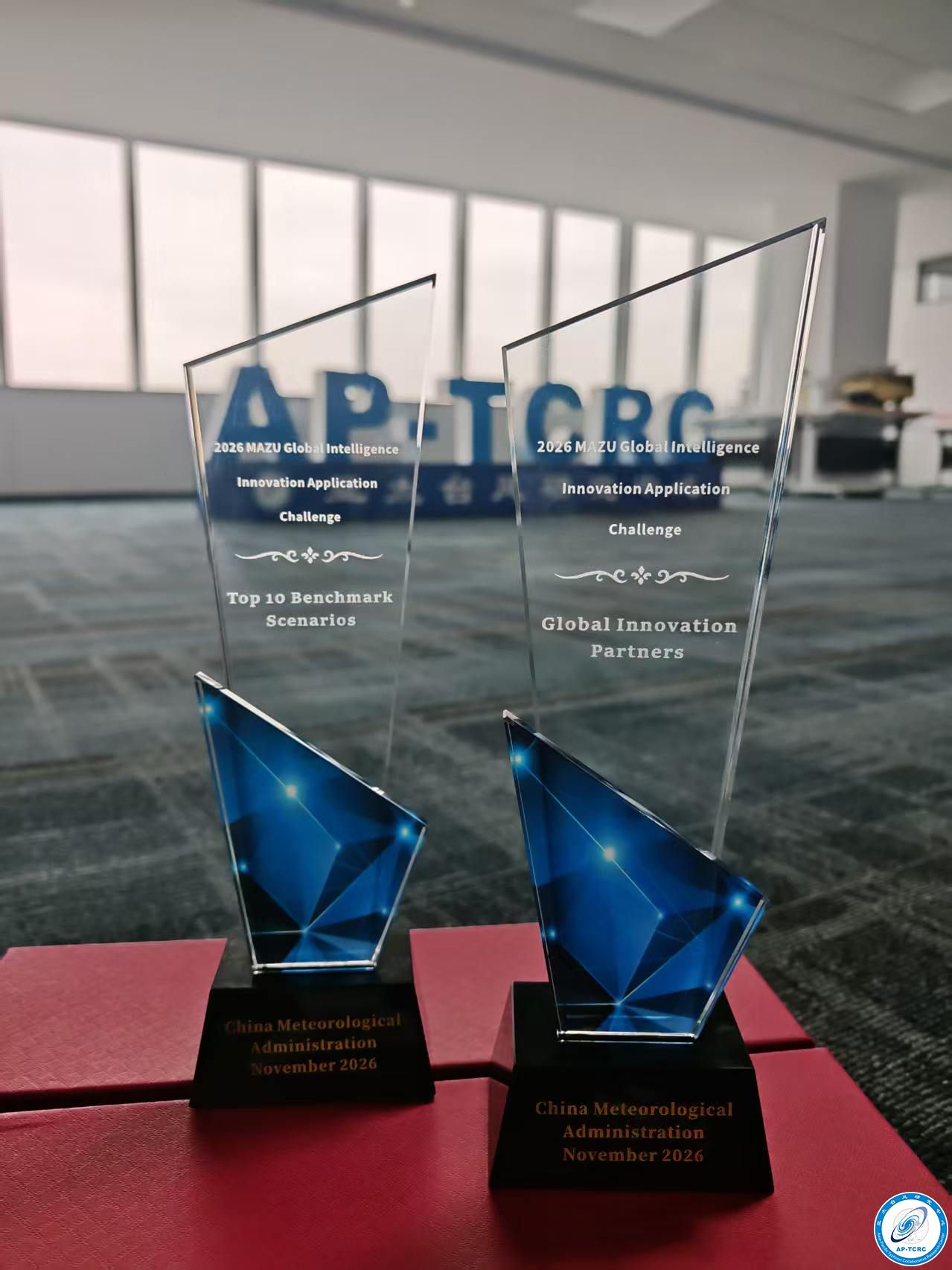
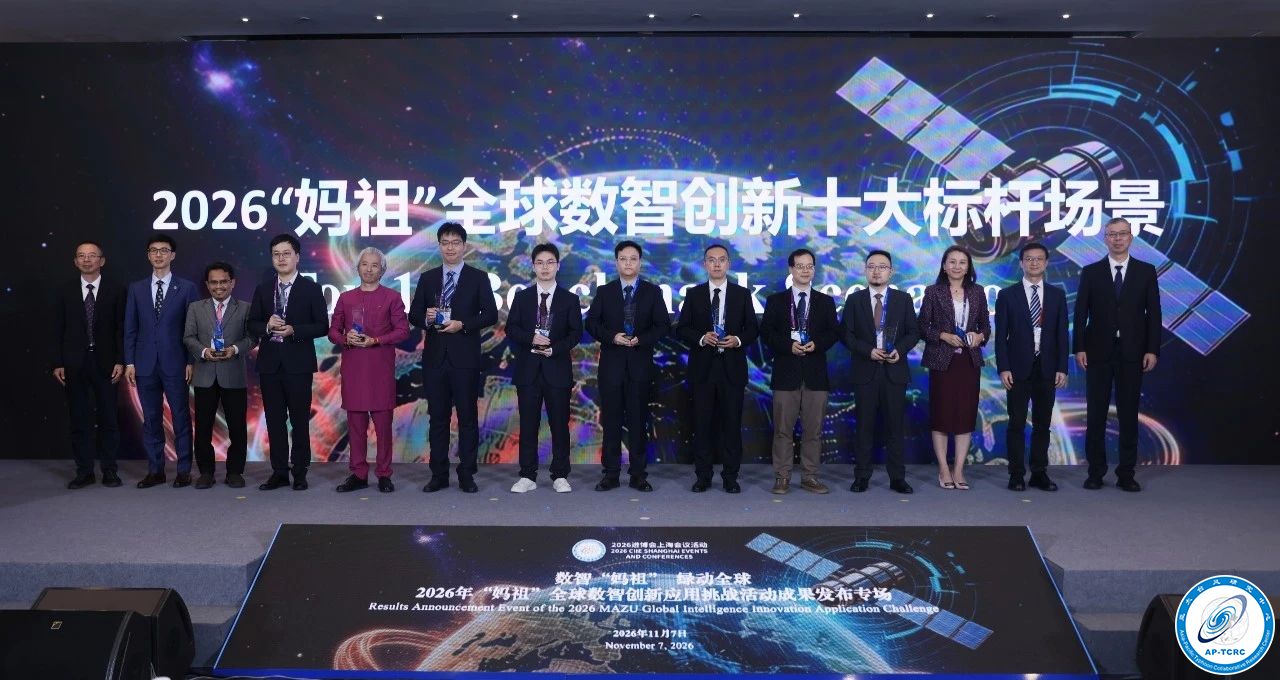
On November 7, the results release session of the 2026 MAZU Global Intelligence Innovation Application Challenge was held in Shanghai. At the event, the lists of Top 10 Benchmark Scenarios, outstanding cases and Global Innovation Partners for the challenge were released. The Asia-Pacific Typhoon Collaborative Research Center (AP-TCRC) actively participated in the event. Two international cooperation achievements submitted by AP-TCRC together with partner institutions from multiple countries and regions have been recognized. One solution was named one of the Top 10 Benchmark Scenarios, and AP-TCRC was selected as a Global Innovation Partner of this year’s challenge.
Global Port Typhoon Hazard Intelligent Early Warning Solution Selected as One of the Top 10 Benchmark Scenarios
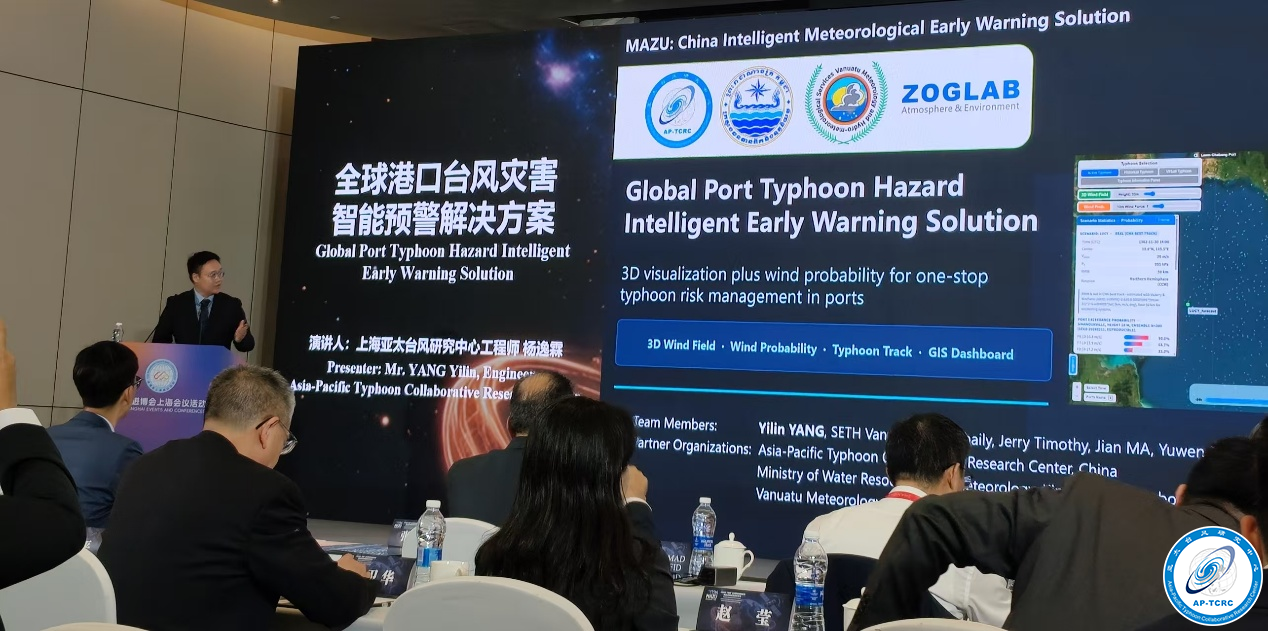
The Global Port Typhoon Hazard Intelligent Early Warning Solution, jointly submitted by AP-TCRC, the Ministry of Water Resources and Meteorology, Kingdom of Cambodia (MOWRAM), Vanuatu Meteorology and Hydro-meteorological Services (VMHS), and ZOGLAB Microsystem (Hangzhou), was successfully selected into the Top 10 Benchmark Scenarios of the 2026 MAZU Global Intelligence Innovation Application Challenge.
Targeting the demands of safe port operation and disaster risk prevention and mitigation under tropical cyclone impacts, the project integrates historical typhoon observations, multi-source meteorological data and artificial intelligence technologies to develop a port 3D wind field reconstruction and wind probability forecasting system. Through typhoon track identification and similar typhoon matching, AI-powered 3D wind field reconstruction, wind probability analysis and WebGIS visualization, it realizes refined wind field analysis and wind risk forecasting for different locations and altitude layers within the port area, and provides meteorological decision support for port quay crane operations, vessel berthing and unberthing, and emergency dispatch.
Economic Loss Assessment of Typhoon Remnant Rainfall Disasters Included in the Global Innovation Partners List
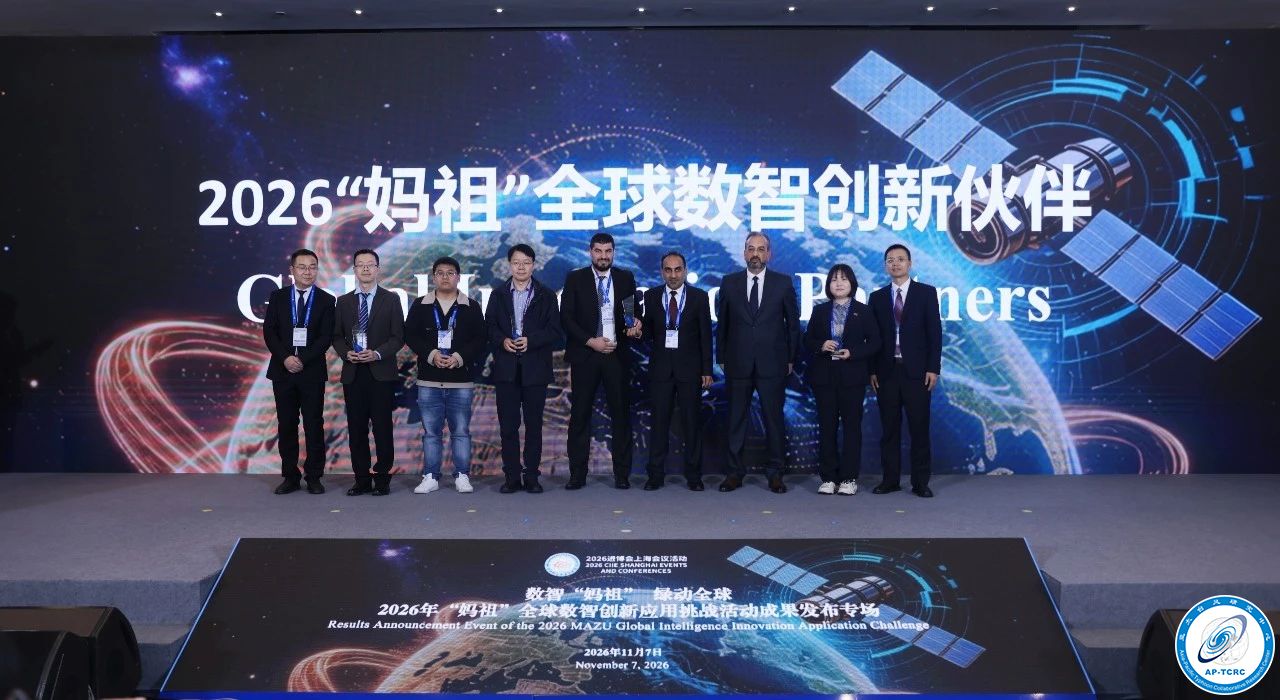
In addition, the Economic Loss Assessment of Typhoon Remnant Rainfall Disasters, jointly submitted by AP-TCRC, the Numerical Weather Prediction and Remote Sensing Division of the National Centre for Hydro-Meteorological Forecasting (NCHMF) under the Vietnam Meteorological and Hydrological Administration (VNMHA), and the Forecasting and Climate Division (F&C) of the Tropical Cyclone Warning Centre (TCWC) under the Pakistan Meteorological Department (PMD), was also recognized by the relevant awards of the challenge. AP-TCRC was selected as a Global Innovation Partner of this year’s event.
Focusing on persistent rainfall and secondary disasters caused by remnant circulation after typhoon landfall and weakening, the project applies technologies including typhoon rainfall monitoring and analysis, disaster impact identification and economic loss assessment to quantify the economic losses caused by typhoon remnant rainfall, and analyzes the disaster impact scope, damage severity, and spatial distribution of economic losses. It provides a scientific basis for typhoon remnant rainfall disaster loss evaluation, disaster risk management and disaster prevention and mitigation decision-making.
The recognition of the two international cooperation outcomes is a positive result of AP-TCRC’s active participation in international exchanges and cooperation related to MAZU: China Intelligent Meteorological Early Warning Solution, as well as its continuous efforts to advance international scientific and technological cooperation and expand AI-enabled meteorological application scenarios. Going forward, the center will continue to leverage its strengths in typhoon research and technology, actively integrate into the MAZU international cooperation framework, and strengthen exchanges and cooperation with global meteorological authorities, research institutions and relevant enterprises. It will promote the application of technologies such as satellite remote sensing, artificial intelligence and multi-source meteorological data fusion in typhoon monitoring and early warning, heavy rainfall forecasting and disaster risk assessment, help translate scientific and technological innovation outcomes into tangible benefits for global disaster prevention and mitigation and contribute to improving global meteorological disaster early warning capacity and meteorological service levels.